
If you want to bat consistently and score runs at any level, learning how to grip a cricket bat is the single most important skill you can develop. A poor grip leads to mistimed shots, weak drives, and unnecessary dismissals. Get it right from the start, and everything else, your footwork, your timing, your confidence, follows naturally.
Table of Contents
Why the Grip Is the Foundation of Good Batting
Every shot you play starts with your hands. Your grip controls the bat face at the point of contact, which directly affects where the ball goes. Even experienced club players develop bad habits over time, often without realising the grip is the root cause of their problems.
Before we compare the three main grips, here are the basics every batter must understand:
Gray-Nicolls Cricket Bat Grip (Pack of 3)
A worn grip undermines even perfect technique — fresh Gray-Nicolls grips restore control and feel instantly.
ⓘ Affiliate link — we earn a small commission if you buy, at no extra cost to you.
- Both hands should work together as a single unit, not independently.
- The V-shapes formed by your thumb and index finger on each hand are your alignment guide.
- Grip the bat with your fingers, not your palms. Palm gripping kills timing.
- A relaxed grip generates more power than a tight, tense one.
How to Grip a Cricket Bat: The Classic Two-V Grip Explained
This is the grip taught to beginners worldwide and used by the majority of professional batters. It offers the best balance of control, power, and shot range.
- Step 1 – Position your top hand: Hold the bat handle with your top hand (left hand for right-handers). The V formed by your thumb and index finger should point down toward the outside edge of the bat.
- Step 2 – Add your bottom hand: Place your bottom hand directly below your top hand. The V on this hand should also point down the outside edge, roughly parallel to the first V.
- Step 3 – Check the alignment: Both Vs should point between the outside edge and the spine of the bat. This is your neutral, balanced position.
- Step 4 – Relax your hands: Squeeze the handle gently. Think of holding a tube of toothpaste without squeezing any out. Firm but relaxed.
- Step 5 – Check the bat face: Lift the bat to your stance position. The bat face should point straight at the bowler, not angled toward leg or off side.
This grip gives you free movement through the line of the ball and works for drives, cuts, pulls, and defensive shots.
The Strong Grip: More Power, Less Flexibility
Some batters, particularly those who favour the leg side and aggressive play, use a strong grip. Both Vs are rotated slightly toward the back of the bat handle.
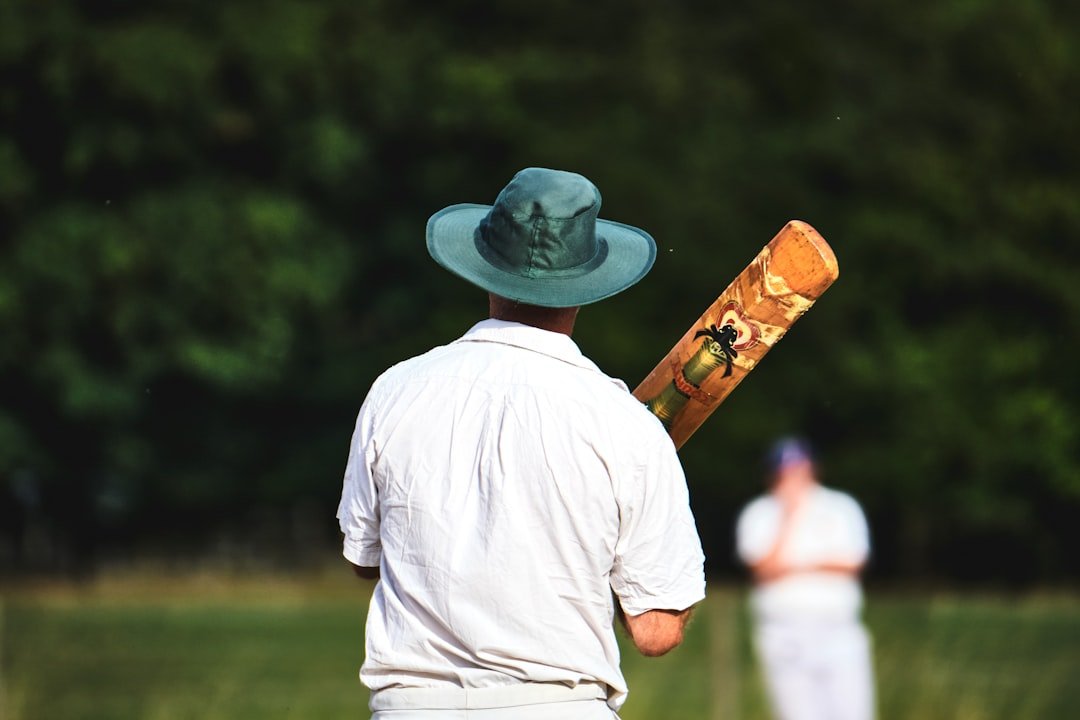
This grip encourages a closed bat face, which naturally helps with on-drives, flicks, and pull shots. However, it can make off-side play harder and increase the risk of playing across the line against straight balls.
- Best suited to: aggressive batters who dominate the leg side.
- Risk: vulnerability to good length balls on off stump.
- Used by: many T20 power hitters who prioritise scoring over defence.
The Weak Grip: Control and Off-Side Play
The weak grip is the opposite rotation. Both Vs sit closer to the inside edge or front face of the bat. This opens the bat face naturally, making it easier to play cover drives, cut shots, and guide the ball through the off side.
The downside is that leg-side shots become harder to execute cleanly. Batters who rely heavily on working the ball through midwicket or sweeping often struggle with this grip.
- Best suited to: technically minded batters who play a lot through the off side.
- Risk: limited leg-side shot options.
- Watch for: a tendency to nick off to slip with the face too open.
Which Grip Should You Use?
For most club and recreational batters learning how to grip a cricket bat for the first time, the classic two-V grip is the right starting point. It gives you the widest range of shots and the clearest feedback when something goes wrong.
Here is a simple way to think about grip selection:
- Beginner or improver: Start with the classic two-V grip every time.
- Aggressive T20 batter: Experiment with a slightly stronger grip.
- Technical, Test-style batter: A neutral to slightly weak grip suits your game.
The best approach is to practice all three in the nets and notice how each one affects your natural shot-making. Small adjustments to grip can unlock huge improvements in your batting.
Final Thoughts
Mastering how to grip a cricket bat correctly takes a few focused net sessions, but the rewards are immediate. You will time the ball better, play straighter, and build the confidence that comes from having a solid technical base. Go back to your grip every time you hit a bad patch of form. Nine times out of ten, that is where the answer is hiding.