
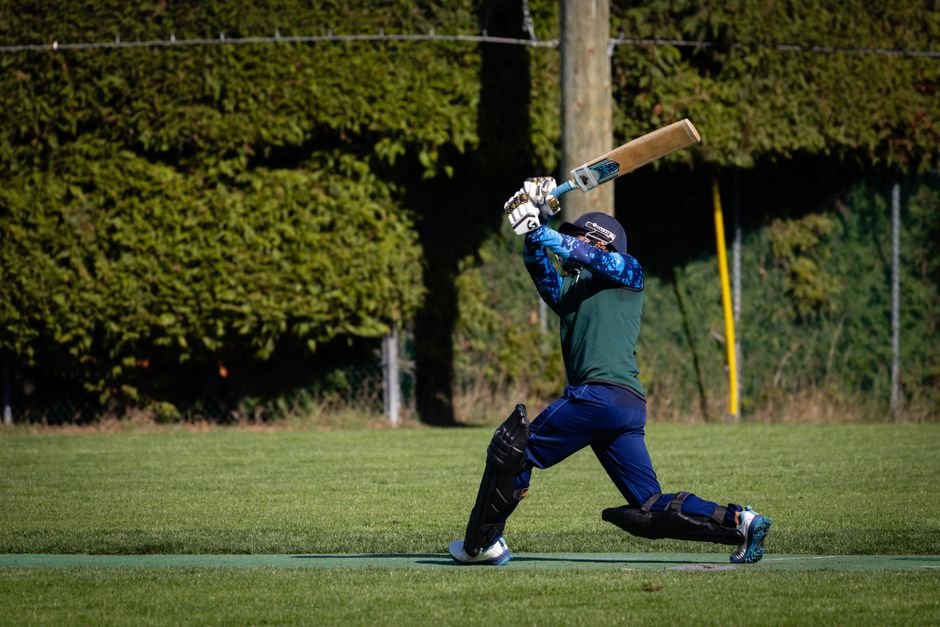
Choosing the right bat can make or break your game, and weight is one of the most misunderstood factors in that decision. This cricket bat weight guide will help you find the perfect balance between power and control, whether you are a weekend club player or an aspiring professional. Get it wrong and you risk poor shot execution, slower bat speed, and even injury. Get it right and everything clicks.
Table of Contents
What Is the Standard Weight Range for Cricket Bats?
Most adult cricket bats weigh between 2 lb 7 oz and 2 lb 12 oz (1.1 to 1.25 kg). That range might seem narrow, but even a few ounces can dramatically change how a bat feels and performs during a long innings.
Here is a quick breakdown of the general weight categories:
Gray-Nicolls Cobra 1000 English Willow Cricket Bat
A perfectly balanced mid-weight English willow bat delivering power and control for club players of all levels.
ⓘ Affiliate link — we earn a small commission if you buy, at no extra cost to you.
- Light: Below 2 lb 7 oz – ideal for players who prioritize bat speed and wrist work
- Medium: 2 lb 7 oz to 2 lb 9 oz – the sweet spot for most club and recreational players
- Heavy: 2 lb 10 oz and above – suited to power hitters with strong technique and upper body strength
Junior bat weights vary significantly by age group, starting as low as 1 lb 8 oz for the youngest players. Always match the bat weight to the player’s physical development, not their ambition.
The Cricket Bat Weight Guide: How Weight Affects Your Batting
Weight directly influences three key areas of batting: bat speed, shot timing, and physical fatigue. A heavier bat can generate more power on contact, but only if the batsman can swing it quickly enough. A bat that is too heavy slows your reaction time against pace bowling and makes late cuts and flicks harder to execute.
A lighter bat gives you faster hands and greater control for technical play. This is why top-order batsmen who face new ball bowling often prefer slightly lighter bats, while middle-order power hitters sometimes go heavier.
Key points to understand:
- Heavier bats create more momentum but demand greater strength and fitness
- Lighter bats improve timing and reduce strain on wrists and elbows
- The feel of a bat’s pick-up weight often differs from its actual weight due to how the willow is shaped
What Is Pick-Up Weight and Why Does It Matter?
Pick-up weight is how heavy a bat feels when you hold it in your batting stance. It is arguably more important than the actual weight printed on the label. A bat with a high spine and thick edges might weigh 2 lb 10 oz but feel like 2 lb 8 oz because the weight is distributed closer to the handle.
Conversely, a bat with a low middle and flatter profile might feel heavier than it actually is. Always pick up a bat and take a few shadow swings before buying. The pick-up tells you far more than the scales do.
Choosing the Right Weight by Playing Style and Age
There is no single perfect weight. The right choice depends on your age, strength, skill level, and the format you play most often.
Use this as a general guide:
- Under 13s: 1 lb 8 oz to 2 lb 2 oz
- Under 15s to Under 17s: 2 lb 3 oz to 2 lb 7 oz
- Adult beginners and recreational players: 2 lb 7 oz to 2 lb 9 oz
- Experienced club players: 2 lb 8 oz to 2 lb 10 oz based on personal preference
- Power hitters with strong technique: 2 lb 10 oz to 2 lb 12 oz
Players who bat for long periods in Test or multi-day formats may prefer a lighter bat to preserve energy. T20 power hitters often go heavier to maximize boundary hitting.
Common Mistakes When Selecting Bat Weight
Many players, especially younger ones, pick bats that are far too heavy. They associate a heavier bat with hitting the ball further, but without the strength and technique to control it, power actually decreases. Bat speed is what generates power, not raw weight alone.
Another common mistake is ignoring the impact of long innings. A bat that feels fine for 10 overs can become a serious burden by over 40. Always consider how the bat feels after sustained use, not just first pick-up.
Never buy a bat purely based on what a professional cricketer uses. Players like Rohit Sharma or Ben Stokes have years of physical conditioning behind their equipment choices.
Conclusion
This cricket bat weight guide comes down to one core principle: the best bat is the one you can swing fast, control confidently, and use comfortably for your entire innings. Start with a medium-weight bat, focus on pick-up feel, and adjust from there as your strength and technique develop. The right weight does not just improve your shots, it protects your body and extends your time at the crease.