
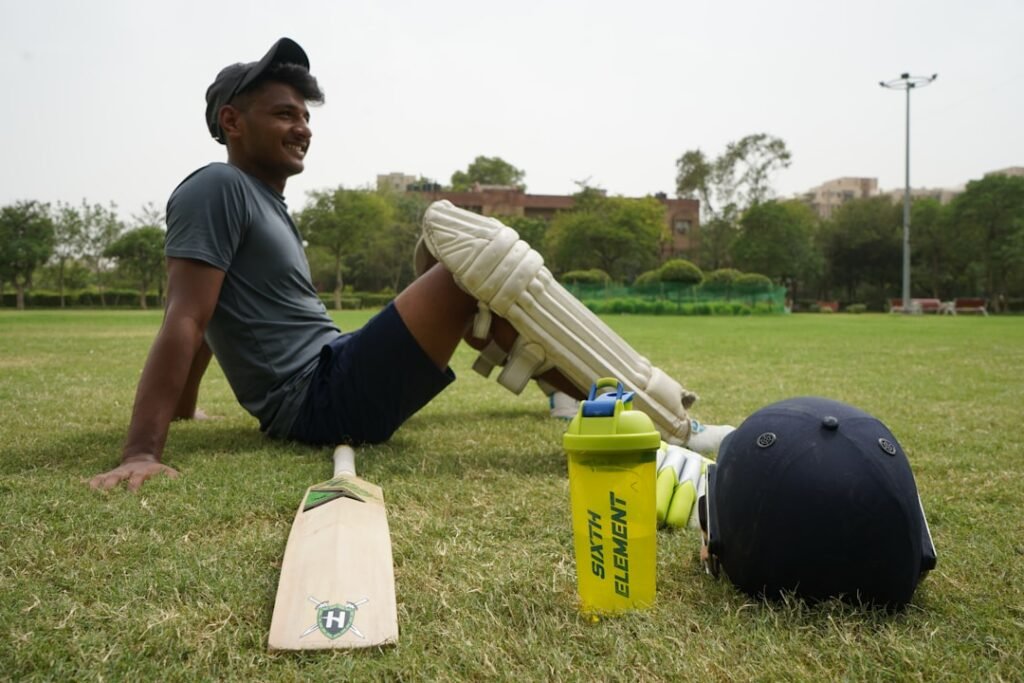
Photo by Yogendra Singh on Unsplash
Learning how to keep wickets in cricket is one of the most rewarding skills you can develop. The wicketkeeper is the most active fielder on the pitch, involved in every single delivery. Whether you are behind the stumps to pace or spin, your positioning, footwork and glove work will define your effectiveness. This guide breaks it all down so you can build real confidence behind the stumps.
Table of Contents
Why Wicketkeeping Is More Than Just Catching
Many club players underestimate the wicketkeeper role. It demands sharp reflexes, excellent concentration and strong communication with your captain. You are the eyes behind the play, directing fielders and reading the game constantly.
A good keeper also puts pressure on batters. A sharp keeper creates run-out chances, takes edges and affects how batters play. Your role directly influences the team’s performance in ways that do not always show in the scorecard.
Kookaburra Pro 2.0 Wicketkeeper Gloves
Pro-grade keeping gloves with superior grip and palm protection to help you take every edge cleanly.
ⓘ Affiliate link — we earn a small commission if you buy, at no extra cost to you.
- You must stay mentally focused for every ball of the innings
- Your positioning affects the entire slip cordon
- A missed stumping or dropped catch can change a match
How to Keep Wickets in Cricket: The Basic Stance
Before anything else, you need a solid base position. Your stance is the foundation of everything that follows. Get this wrong and your footwork and glove work will suffer immediately.
- Feet width: Stand with your feet just wider than shoulder-width apart. Your weight should be evenly distributed and balanced on the balls of your feet.
- Squat depth: Lower into a comfortable squat. Your thighs should be close to parallel with the ground. Do not sit too low or you will slow your movement.
- Glove position: Rest your gloves just above the ground with fingers pointing downward. This is your ready position for every delivery.
- Head still: Keep your head level and your eyes on the bowler’s hand. Pick up the ball as early as possible.
- Body relaxed: Stay loose. Tension slows your reactions. Breathe steadily as the bowler runs in.
Footwork: Moving to the Ball Correctly
Good footwork separates average keepers from excellent ones. You need to move early and position your body behind the ball, not just reach for it with your gloves.
For balls moving down the leg side, push off your right foot early and move across quickly. Many keepers drop leg-side catches simply because they move too late.
- Always try to get your body behind the line of the ball
- Use short, quick shuffle steps rather than large strides
- Keep your head as still as possible while moving
- Stay low throughout your movement, do not rise early
For wide balls, practice the split-step technique. As the ball is released, make a small split-step to load your weight. This triggers faster lateral movement in either direction.
Glove Technique: Taking the Ball Cleanly
Your gloves are your primary tool. Soft hands are the key principle every coach will reinforce. You want to absorb the ball, not fight against it.
- Fingers down: For balls at or below the waist, keep fingers pointing toward the ground. This is the safest catching position for most deliveries.
- Fingers up: For balls above the waist, turn your fingers upward and cup the ball into your gloves.
- Give with the catch: Draw your hands back slightly as the ball hits your gloves. This cushions the impact and reduces the chance of a rebound.
- Two hands together: Always bring your second glove to meet the ball. One-handed takes should only happen when reaching wide for a catch.
Standing Up versus Standing Back
Knowing when to stand up to the stumps and when to stand back is a critical decision in understanding how to keep wickets in cricket properly.
Stand up to slow and medium-pace bowlers whenever conditions allow. This creates stumping chances and puts pressure on the batter. Stand back to fast bowlers to give yourself time to react.
As a guide, if a bowler is below 70 mph, consider standing up. Above that, stand back to a comfortable distance where you can take the ball at waist height after one bounce.
Drills to Improve Your Keeping Skills
Consistent practice is the only way to master how to keep wickets in cricket at a higher level. Repetition builds muscle memory and confidence.
- Reaction ball drills: Throw a reaction ball against a wall and catch the unpredictable rebounds in your gloves
- Leg-side feeds: Have a partner throw balls down the leg side repeatedly to sharpen your lateral movement
- Standing up practice: Spend time standing up to a spinner in the nets, focusing on clean glove work and quick stumping movements
Conclusion
Mastering how to keep wickets in cricket takes time, patience and deliberate practice. Focus on your stance first, then your footwork, and finally your glove technique. Each element builds on the last. Work on the drills consistently, stay vocal behind the stumps and trust your preparation. The more you practise, the more natural your reactions will become, and the bigger an impact you will make for your team.