
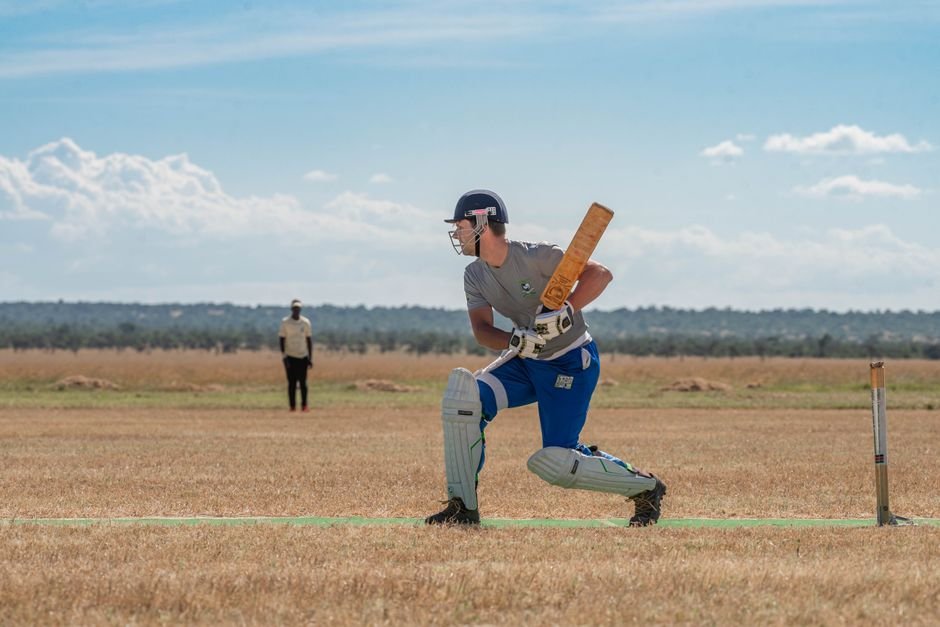
Good footwork is the foundation of every great batter. Whether you are playing Test cricket or a T20 slog, how you move your feet determines your balance, timing, and shot selection. This cricket batting footwork guide breaks down the two core movement patterns every batter must master: front foot play and back foot play. Get these right and you will find the right position for almost every ball bowled at you.
Table of Contents
Why Footwork Matters More Than You Think
Many club batters focus on their grip or backlift while ignoring their feet. That is a mistake. Your feet position your body. Your body dictates your head position. Your head controls your eyes. Poor footwork means your eyes are never in the right place to judge the ball properly.
Great batters like Sachin Tendulkar, Steve Smith, and Joe Root all share one quality: they move decisively to the pitch of the ball. Footwork is not just a technical detail. It is the engine of the entire batting system.
Gray-Nicolls Cricket Batting Catching Trainer Reflex Ball on Elastic
Train front & back foot movement alone — builds the decisive footwork habits this guide teaches.
ⓘ Affiliate link — we earn a small commission if you buy, at no extra cost to you.
The Complete Cricket Batting Footwork Guide: Front Foot vs Back Foot
Every ball you face demands one of two fundamental responses. You either move forward to full-pitched deliveries or move back to short-pitched deliveries. Reading the length early is what triggers the correct movement. Let us look at each in detail.
Front Foot Play
Front foot play is used against full-pitched deliveries that invite you to drive or defend. The goal is to get your front foot close to the pitch of the ball, allowing you to play under your eyes with a straight bat.
- Lead with your front foot toward the ball, not across your body
- Bend the front knee to get low and stay balanced
- Keep your head over the ball to avoid playing away from the body
- Drive through the line with a high elbow for clean contact
A common fault is planting the front foot too far to the off side, which closes the body and limits shot options. Your front foot should point toward the bowler or slightly toward mid-on depending on the line of the delivery.
Back Foot Play
Back foot play is your response to short-pitched deliveries and good-length balls that rise above knee height. You move back and across toward off stump to create time and space.
- Push off your front foot quickly to trigger the back foot movement
- Move back and across so your back foot lands parallel to the crease
- Stay tall to watch the ball off the pitch and maintain control
- Use the extra time to play cuts, pulls, or defensive prods as needed

The back and across movement is crucial. Simply rocking back without the lateral step leaves you vulnerable to the ball that cuts back in. Moving across keeps you in line with off stump and gives you options on both sides of the wicket.
Reading the Length Early: The Key to Good Footwork
No footwork system works unless you trigger the movement early. Elite batters pick up the length of a delivery within the first few metres of its flight, before it even bounces. This is what separates good batters from great ones.
Watch the ball from the bowler’s hand. Look for clues in the release point. A higher release often means a fuller delivery. A lower release or quicker arm action can signal something short. Train yourself to make a decision and commit to it rather than hesitating halfway through your movement.
Common Footwork Mistakes and How to Fix Them
Even experienced batters fall into bad habits. Here are the most frequent errors seen at every level of the game.
- Falling across to leg: Your head falls toward leg side, making you vulnerable to the outswinger and off stump deliveries
- Hard hands on back foot: Gripping the bat too tightly when playing back leads to edges behind square
- Half-committed movement: Going neither fully forward nor fully back leaves you in no man’s land with poor balance and limited control
The fix for most footwork problems is simple: make a decision and commit fully. Batting coaches often say be decisive because a committed wrong decision is usually safer than a hesitant correct one.
Drills to Improve Your Batting Footwork
Use these practice methods to sharpen your movement patterns between net sessions.
Throw-down drills with a partner: Ask a throw-down specialist to alternate full and short lengths randomly. Your job is to move quickly and decisively to each ball. This trains your read-and-react process faster than any other drill.
Cone marker footwork: Place a cone at the crease and another one metre forward. Practice stepping to each cone on command. This builds muscle memory for the correct distance of movement on the front foot.
Shadow batting: Without a ball, go through the trigger movement and footwork for every shot in your game. This is underrated and used by international batters regularly during preparation before big matches.
Conclusion
Mastering front foot and back foot movement is non-negotiable if you want to bat consistently at any level. This cricket batting footwork guide gives you the framework to understand why footwork matters, how each movement works, and what to fix if things go wrong. Work on reading length early, commit to your movements, and practice with purpose. Good footwork will not just improve your technique. It will improve your confidence at the crease.