
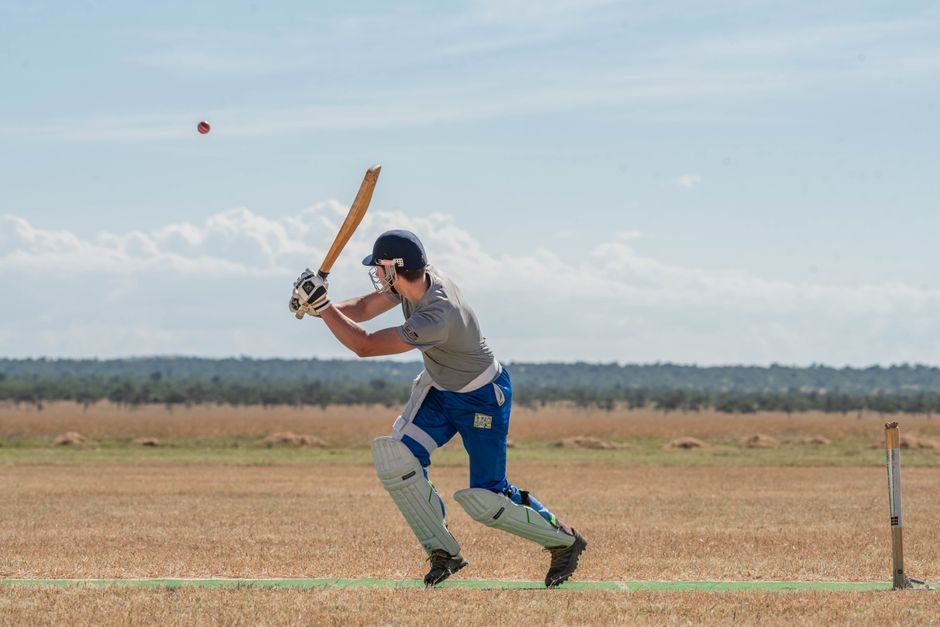
Whether you’re a beginner picking up a bat for the first time or an experienced club player looking to sharpen your technique, a solid batting stance is the foundation of everything. This cricket batting stance guide breaks down exactly how to position your feet, align your head, and grip the bat correctly so you can play with confidence and consistency at any level.
Table of Contents
Why Your Batting Stance Matters More Than You Think
Your stance sets up every shot you play. A poor starting position forces your body into compensating movements mid-swing, which leads to mistimed shots, poor footwork, and inconsistent contact. The best batters in the world, from Virat Kohli to Steve Smith, have distinct stances, but all share core fundamentals that allow them to move freely in any direction.
A good stance gives you balance, vision, and the ability to attack or defend at a moment’s notice. Get the basics right and everything else becomes easier.
Gray-Nicolls Astro 950 Cricket Batting Gloves
Get the perfect grip every time — quality batting gloves give you control, comfort and confidence at the crease.
ⓘ Affiliate link — we earn a small commission if you buy, at no extra cost to you.
Foot Position: The Base of Your Batting Stance
Your feet are the platform your entire game is built on. Here is how to set them up correctly:
- Stand sideways to the bowler with your non-dominant shoulder pointing down the pitch.
- Feet shoulder-width apart for a stable, balanced base. Too narrow and you lose balance. Too wide and your movement is restricted.
- Back foot parallel to the crease, front foot pointing slightly toward mid-on. This opens your hips just enough for natural movement.
- Keep your weight evenly distributed across both feet, slightly on the balls of your feet, not your heels.
Avoid the common mistake of standing too open or too closed. An open stance can expose your stumps, while an overly closed stance limits your offside play. Find the sideways position that feels natural and balanced.
Head Position: The Most Underrated Part of Any Cricket Batting Stance Guide
Your eyes must be level and your head must be still. This sounds simple but most amateur batters completely overlook it. When your head tilts, your eyes tilt, and your judgment of line and length becomes unreliable.
Keep these points in mind:
- Your chin should be over your front shoulder, which helps your eyes track the ball from the bowler’s hand to your bat.
- Both eyes must face the bowler squarely. If you turn your head too far, your dominant eye loses its line of sight.
- Keep your head upright and still as the bowler delivers. Head movement before the ball arrives causes early commitment and misjudgement.
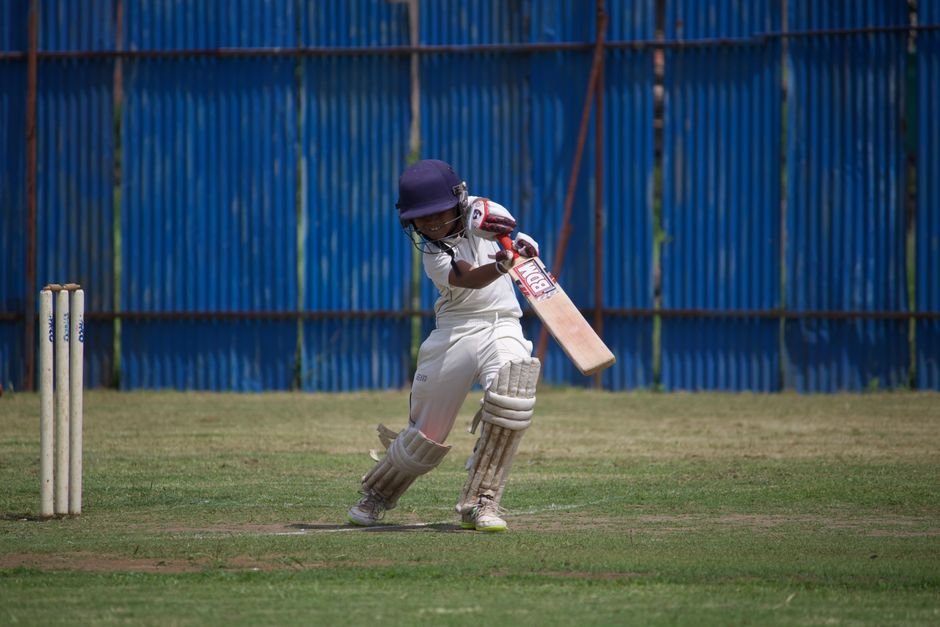
Watch footage of Sachin Tendulkar or Kane Williamson. Their heads barely move even as their bodies shift into the shot. That stillness is not accidental, it is trained discipline.
How to Hold the Bat: Grip Fundamentals
A correct grip allows the bat to flow naturally through the hitting zone. A tight, incorrect grip creates tension that kills timing.
Follow these grip fundamentals:
- Hold the bat with the V-shapes formed by your thumb and index finger on both hands aligned down the back of the bat, pointing toward the outside edge.
- The top hand provides control and direction. The bottom hand provides power. Top hand dominance is key for most shots.
- Grip pressure should be firm but relaxed, roughly a 6 out of 10. Squeezing too hard creates a stiff swing and kills timing.
- The bat handle should sit more in the fingers than the palm for better wrist movement and bat speed.
If your bottom hand is dominant, you will struggle with balls outside off stump and tend to hit across the line. Work on trusting your top hand and you will see immediate improvement.
Putting It All Together: Stance Drills and Common Fixes
Reading about technique and applying it are two different things. Use these simple checks during net sessions to reinforce good habits.
The mirror drill: Stand in front of a full-length mirror in your stance. Check foot alignment, head level, and shoulder position. Do this for five minutes before every practice session.
The crease tap: Before the bowler runs in, lightly tap your back toe on the crease. This resets your weight distribution and stops you from falling back on your heels.
Grip pressure check: Squeeze the bat as tight as you can, then release to about half that pressure. That is your ideal grip tension. Reset it between every delivery.
A complete cricket batting stance guide always emphasizes repetition. Stance improvement happens off the pitch as much as on it.
Final Thoughts
Your batting stance is not a one-size-fits-all formula, but the core principles of balanced feet, a still and level head, and a relaxed yet controlled grip apply to every batter at every level. Use this cricket batting stance guide as your reference point, practise the fundamentals consistently, and your overall batting game will improve faster than you expect. Small technical adjustments made early save years of bad habits later.