
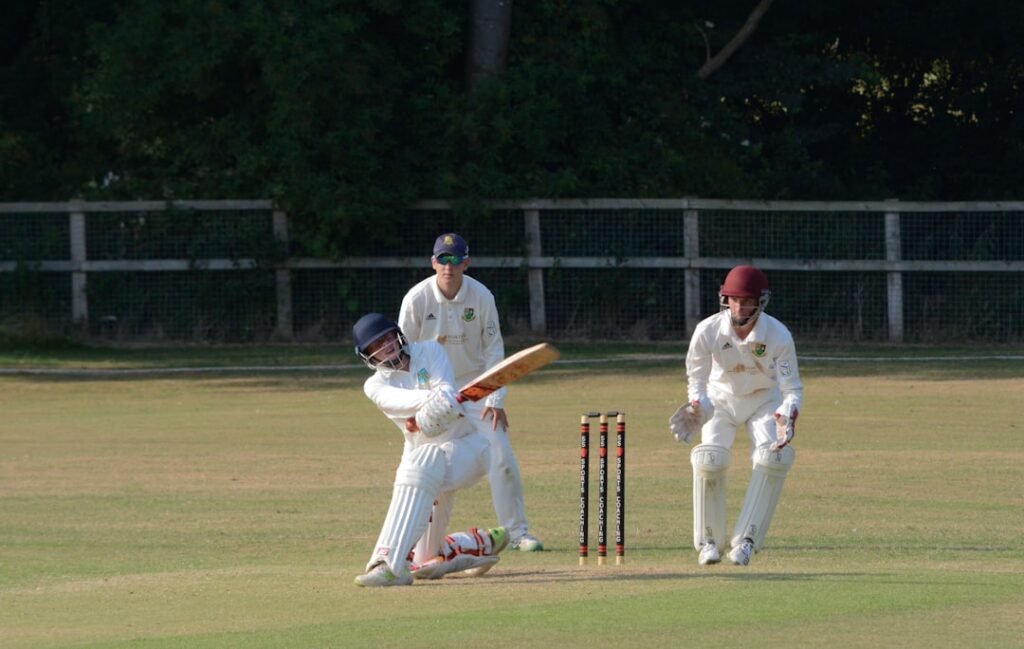
Photo by John Oswald on Unsplash
If you want to become a match-winner for your team, learning how to bowl death overs cricket is one of the most valuable skills you can develop. The final four to six overs of a T20 or ODI innings are where games are won and lost. Batters are swinging hard, fielders are under pressure, and the bowler who stays calm and executes their skills wins the battle. This guide breaks down exactly what you need to do.
Table of Contents
Why Death Overs Bowling Is a Specialist Skill
Death overs bowling is different from any other phase of the game. You are not trying to take wickets with swing or spin. You are trying to deny runs, create doubt and execute under extreme pressure. A batter who has been in for 15 overs is dangerous. They know the pitch, they are set, and they are looking to clear the boundary.
Most club bowlers fail at the death because they go too full, too straight, or too predictable. The best death overs specialists mix pace, line, length and variation constantly. They have a plan for every delivery.
Kookaburra Cricket Ball Training Yorker Target Mat
Hit your yorker mark every time — this training mat helps you groove perfect death-over accuracy in the nets.
ⓘ Affiliate link — we earn a small commission if you buy, at no extra cost to you.
How to Bowl Death Overs Cricket: The Core Techniques
Mastering how to bowl death overs cricket starts with three non-negotiable weapons. Without these, every other tactic falls apart.
- The Yorker: This is your best friend at the death. Aim for the base of the stumps or the crease line of the batter. A full, straight yorker at pace is extremely hard to hit for six. Practice this delivery 50 times every training session until it becomes automatic under pressure.
- The Slower Ball: Grip the ball with your middle finger doing most of the work, or use a knuckle ball grip. The action looks identical to your stock delivery but the ball arrives 10 to 15 km/h slower. Batters who pre-meditate a big hit often sky the ball straight to a fielder.
- The Wide Yorker: This is a yorker angled outside off stump or outside leg stump. It gives the batter less room to swing and the risk of a full toss is reduced because missing your line just makes it wider, not hittable.
- The Back of a Length Delivery: When a batter is dancing down the crease or moving across to hit sixes over mid-wicket, a short-of-length ball into the body is almost impossible to clear the boundary. It cramps the batter for room and forces a mistimed shot.
- The Full Toss (Controlled): Used sparingly, a high full toss outside off stump tempts a batter to go aerial but makes timing very difficult. Use this as a surprise ball, not a regular option.
Field Settings That Support Death Bowling
No matter how well you bowl, poor field placement will cost you runs. Your captain and you must be on the same page before every over.

- Deep square leg and deep fine leg protect against the pull shot and the top edge.
- Long on and long off should be straight and deep to cut off the big hits down the ground.
- Use a sweeper cover on the off side when your plan is to bowl wide yorkers.
- Keep one catching fielder at mid-wicket in case the slower ball results in a top edge or mistimed drive.
Always set your field before you bowl. Changing the field mid-over tells the batter exactly where the next delivery is going.
Mental Approach and Pressure Management
Understanding how to bowl death overs cricket is as much about mindset as it is about skill. When a batter hits you for six, the worst thing you can do is react by changing your plan entirely.
- Stick to your over plan unless it is clearly not working.
- Breathe and reset between deliveries. Walk back slowly and visualise the next ball.
- Expect to be hit. Even the best T20 bowlers go for 12 to 15 in a death over sometimes.
- Conceding 8 runs off a death over in a T20 is actually a decent result if you do not bowl a no-ball or wide.
A Simple Practice Drill for Club Bowlers
To genuinely improve how to bowl death overs cricket in training, set up this drill at your next net session. Place a cone on a yorker length and another on a back-of-a-length spot. Bowl 12-ball overs alternating between these two lengths. Track how many times you hit each target. Add a slower ball every third delivery. Do this twice a week for a month and your accuracy under pressure will improve significantly.
Once you are hitting your targets 70 percent of the time in nets, you are ready to execute in match conditions.
Conclusion
Death overs bowling separates good cricketers from great ones. By combining the yorker, the slower ball, smart field placement and a calm mindset, you give your team the best chance to defend or restrict any total. Keep practicing, keep refining your variations, and remember that consistency always beats brilliance at the death. The more you practice these skills, the more naturally they will come when the game is on the line.