
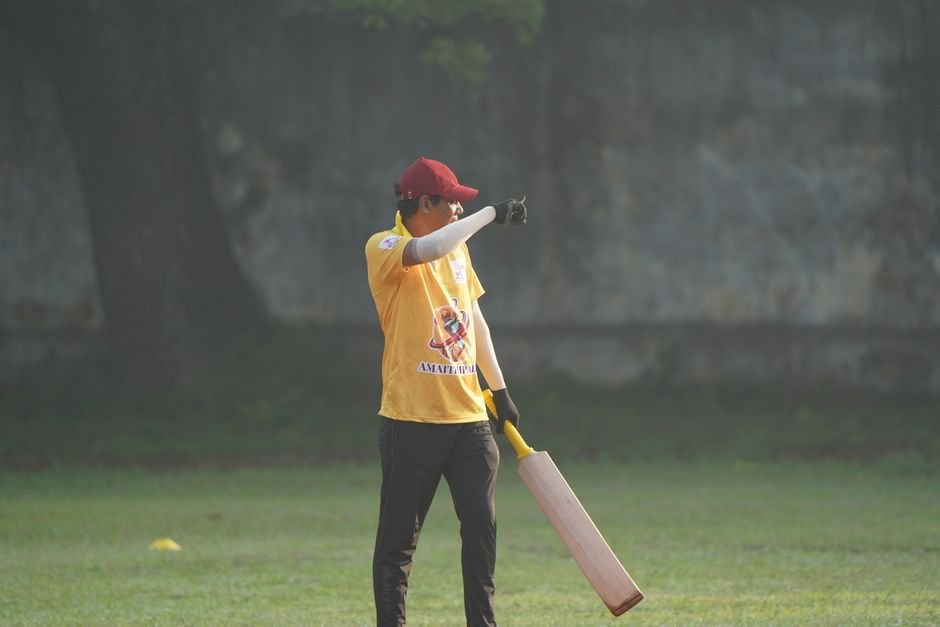
If you want to improve your batting, learning how to grip a cricket bat correctly is the single most important place to start. A good grip gives you control, power, and the ability to play shots in every direction. A poor grip limits you before you even face a delivery. Whether you are just starting out or looking to fix a technical problem, this guide breaks down the three main grips used by cricketers at every level.
Table of Contents
- Why the Grip is the Foundation of Good Batting
- How to Grip a Cricket Bat: The Standard V-Grip Explained
- The 3 Main Cricket Bat Grips Compared
- 1. The Standard V-Grip
- 2. The Rotated Top-Hand Grip
- 3. The Two-Handed Squeeze Grip
- Common Grip Mistakes to Fix Right Now
- Drills to Reinforce Your Grip
- Conclusion
Why the Grip is the Foundation of Good Batting
Every shot you play flows from your hands. Your grip connects your body to the bat, and it determines how freely the bat face can move through the hitting zone. Coaches often say that bad habits in the grip lead to bad habits everywhere else in your technique.
A correct grip helps you with:
Kookaburra Replacement Cricket Bat Grip
A fresh, quality grip lets you practise the V-grip correctly — worn grips cause the bad habits this article warns against.
ⓘ Affiliate link — we earn a small commission if you buy, at no extra cost to you.
- Generating maximum power without tensing your forearms
- Playing both front-foot and back-foot shots with equal control
- Rotating the bat face to deal with swing, seam, and spin
- Reducing the risk of the bat twisting on impact
Get the foundation right and everything else becomes easier to build on.
How to Grip a Cricket Bat: The Standard V-Grip Explained
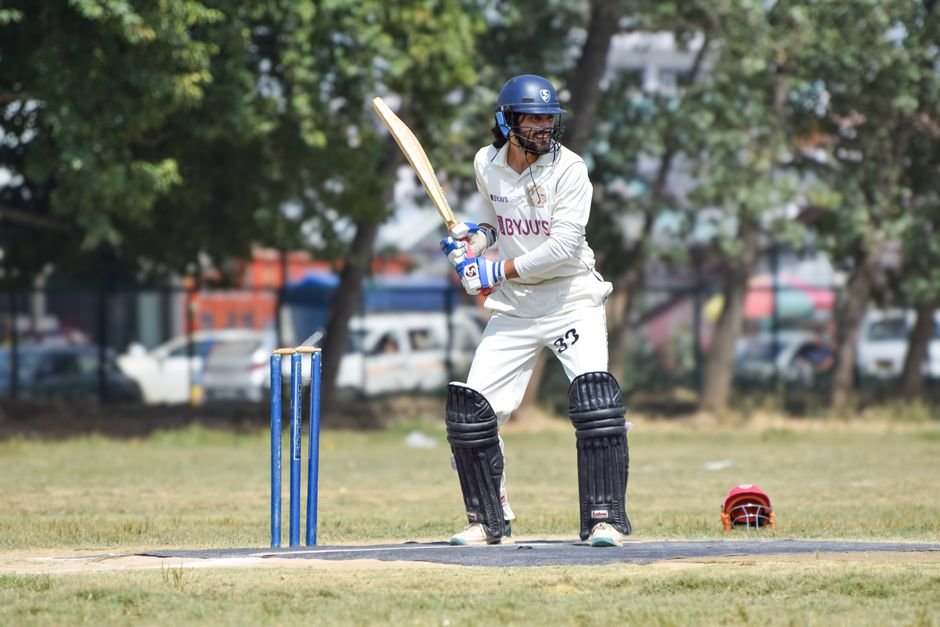
The V-grip is the most widely taught grip in cricket and the one most professional coaches recommend for beginners and club players. Here is how to do it step by step.
- Position your top hand: Hold the bat with your non-dominant hand at the top of the handle. For a right-handed batter, this is your left hand. Wrap your fingers around the back of the handle so the bat face points away from you.
- Align the V of your top hand: The space between your thumb and index finger should form a V shape. Point this V down the outside edge of the bat toward the splice, not across the face.
- Place your bottom hand: Your dominant hand goes below the top hand, close but not touching. The fingers of your bottom hand wrap around the handle naturally.
- Align the V of your bottom hand: Just like the top hand, form a V between your thumb and index finger and point it down the outside edge. Both Vs should be roughly parallel and pointing the same direction.
- Check your grip pressure: Hold the bat as if you are holding a small bird. Firm enough that it cannot fly away, gentle enough that you are not crushing it. Tight hands kill bat speed.
- Let your fingers do the work: Your grip should feel predominantly in your fingers, not your palms. This is what gives you the whip and the feel in your shots.
The 3 Main Cricket Bat Grips Compared
Once you understand the standard grip, it helps to know the variations used by different players and why they choose them.
1. The Standard V-Grip
Both Vs point down the outside edge. This is the most balanced grip and suits all types of batting. It makes it easy to play straight and through the off side. Recommended for all beginners and most club players.
2. The Rotated Top-Hand Grip
The top hand is rotated slightly toward the front of the bat, bringing the V more toward the spine. This opens the bat face slightly at the top of the backlift. Some aggressive batters use this to naturally hit through the leg side more easily. The risk is that it can cause the face to close on straight deliveries if overdone.
3. The Two-Handed Squeeze Grip
Both hands squeeze together with very little gap between them. This creates a more unified feel and can add power for certain players. However, it reduces wrist flexibility and can make it harder to leave the ball or play delicate shots. Some hard-hitting T20 batters prefer this style.
Common Grip Mistakes to Fix Right Now
Knowing how to grip a cricket bat correctly also means knowing what to avoid. Watch out for these common errors:
- Gripping in the palm: This kills feel and reduces bat speed significantly
- Vs pointing toward the spine of the bat: This closes the face and leads to edges to leg
- Holding the bat too tightly: Tension in the hands travels up the arms and stiffens your whole shot
- Top and bottom hand Vs pointing in different directions: This creates inconsistency between your two hands and reduces control
Drills to Reinforce Your Grip
Reading about how to grip a cricket bat is only useful if you practise it away from the crease too. Try these simple drills:
- Mirror drill: Stand in front of a mirror with your bat and check your V positions before every practice session
- Tap drill: Gently tap the bat face on the floor repeatedly, keeping hands relaxed. If your grip is too tight, you will feel your forearms tense up quickly
- Shadow batting: Practise your drives and pulls in slow motion, stopping at contact to check that your grip has not changed shape mid-swing
Conclusion
Mastering how to grip a cricket bat is a skill that pays off at every level of the game. Start with the standard V-grip, keep your hands relaxed, and check your alignment regularly. A great grip does not guarantee runs, but a poor grip will always cost you some. Spend five minutes on your grip before every session and you will notice the difference in your timing and control within weeks. Trust the process and keep working at it.