
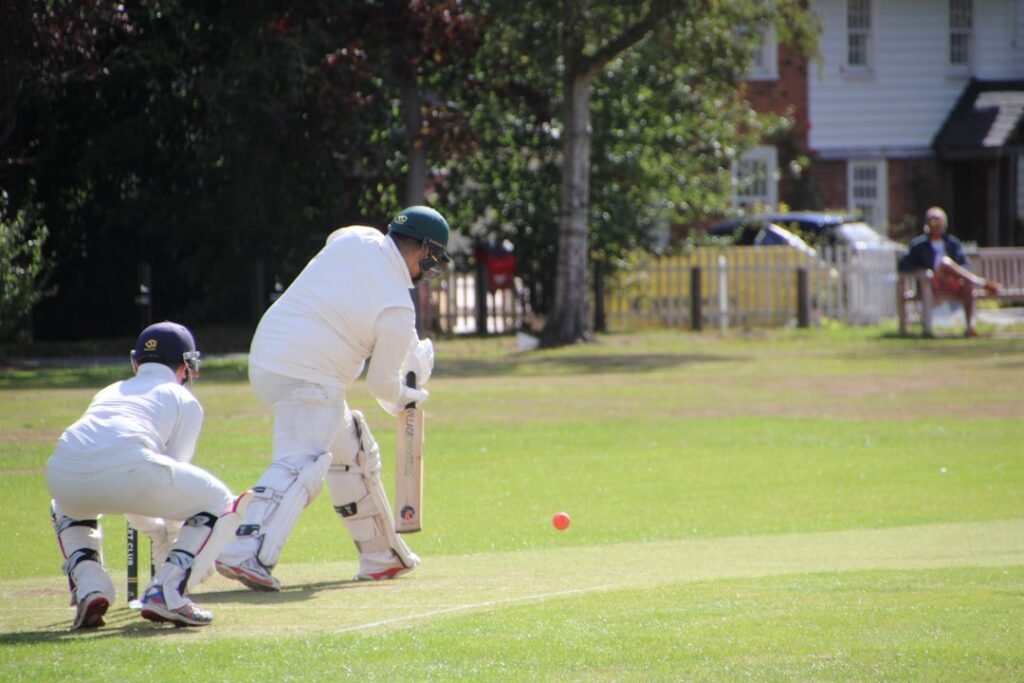
Photo by Village Cricket Co on Unsplash
If you want to become a more dangerous bowler, learning how to bowl swing in cricket is one of the best skills you can develop. Swing bowling can beat the best batters in the world without bowling at extreme pace. Whether you are a club cricketer or an aspiring professional, understanding both conventional and reverse swing will transform your bowling attack.
Table of Contents
What Is Swing Bowling and Why Does It Matter
Swing bowling is the art of making a cricket ball curve through the air before it pitches. Unlike seam movement, swing happens in flight, which gives the batter less time to adjust. A well-bowled swinging delivery is one of the hardest balls to face at any level of the game.
There are two main types of swing you need to understand:
Kookaburra County Cricket Ball (4-piece, Red)
Practice real swing bowling with a match-quality Kookaburra ball featuring a pronounced seam built for movement.
ⓘ Affiliate link — we earn a small commission if you buy, at no extra cost to you.
- Conventional swing – used with a newer ball, typically in the first 30 overs
- Reverse swing – used with an older, worn ball, usually after 40 or more overs
- Contrast swing – a hybrid technique where ball condition is manipulated deliberately
Both types require specific grip changes, seam position, and wrist action. Master these and you become a genuine wicket-taking threat in any conditions.
How to Bowl Swing in Cricket: The Conventional Swing Technique
Conventional swing is your starting point. It works best with a ball that is 10 to 25 overs old, with one shiny side and one rough side maintained correctly.
- Set Your Grip: Hold the ball with your index and middle fingers close together on top of the seam. Your thumb sits underneath on the seam. Keep your ring finger and little finger tucked to the side for support. The shiny side should face the direction you want the ball to swing.
- Position the Seam Upright: The seam must remain as vertical as possible throughout your delivery. A wobbling seam kills swing immediately. Practice holding the ball at home until an upright seam feels completely natural in your hand.
- Run Up and Load Your Action: A smooth, rhythmic run up creates consistent wrist position at the crease. Avoid rushing. The calmer your approach, the better your seam position will be at the point of release.
- Release With Wrist Behind the Ball: At the moment of release, your wrist must stay directly behind the ball, not collapsing to the side. For outswing, angle your wrist slightly toward fine leg. For inswing, angle it slightly toward mid-on.
- Bowl a Full Length: Swing bowlers thrive bowling full. Target the top of off stump or the yorker length. Short-pitched bowling kills swing because the ball spends less time in the air. Fuller length equals more swing time.

Mastering Reverse Swing: The Old Ball Weapon
Reverse swing is one of the most feared weapons in cricket. When conventional swing stops working, reverse swing begins. It is the reason teams like Pakistan and England have dominated with old balls for decades.
The key difference is that with reverse swing, the rough side faces the direction of swing, opposite to conventional swing. The physics shift when the ball becomes old and one side is significantly heavier due to wear.
- Use the Right Ball Condition: You need a ball that is at least 40 overs old with one side clearly rough and one side kept relatively dry and smooth. Moisture on the rough side disrupts the reverse swing effect.
- Flip Your Grip Orientation: Hold the ball the same way as conventional swing but point the shiny side toward where you want the ball to swing. This is the opposite of what you do normally.
- Bowl Faster: Reverse swing works best at above 80 miles per hour. At slower pace, the aerodynamic effect is reduced. This is why reverse swing is primarily a weapon for genuine fast bowlers.
- Keep the Seam Upright: Seam position remains just as critical. An angled seam in reverse swing simply becomes a seam delivery and loses its late movement.
Common Mistakes to Avoid
Many club bowlers struggle with swing not because of their action but because of small errors in preparation and execution. Watch out for these:
- Gripping the ball too tightly, which tenses the wrist and disrupts seam position
- Bowling too short and allowing the swing to flatten out
- Neglecting to maintain the ball properly during fielding
- Using an older ball for conventional swing when conditions no longer support it
Drills to Improve Your Swing Bowling
Consistent practice away from the nets builds better swing bowling habits faster than you think.
- Mirror drill: Stand in front of a mirror and practice your release position, checking seam angle and wrist position
- Cone target drill: Place a cone on a full length and aim to move the ball past it from off stump to middle stump
- Contrast bowling sets: Bowl four overs with a new ball working on conventional swing, then switch to a 40-over ball for reverse swing practice
These drills build muscle memory. The more natural your grip and wrist position feel, the more consistently you will swing the ball in a match.
Conclusion: Start Swinging the Ball Today
Understanding how to bowl swing in cricket is a journey that rewards patience and repetition. Conventional swing builds your foundation, and reverse swing becomes your match-winning weapon as you develop. Work on your grip, maintain your seam position, and bowl full. Every great swing bowler from James Anderson to Wasim Akram built these same fundamentals into their game. Now it is your turn to do the same.