
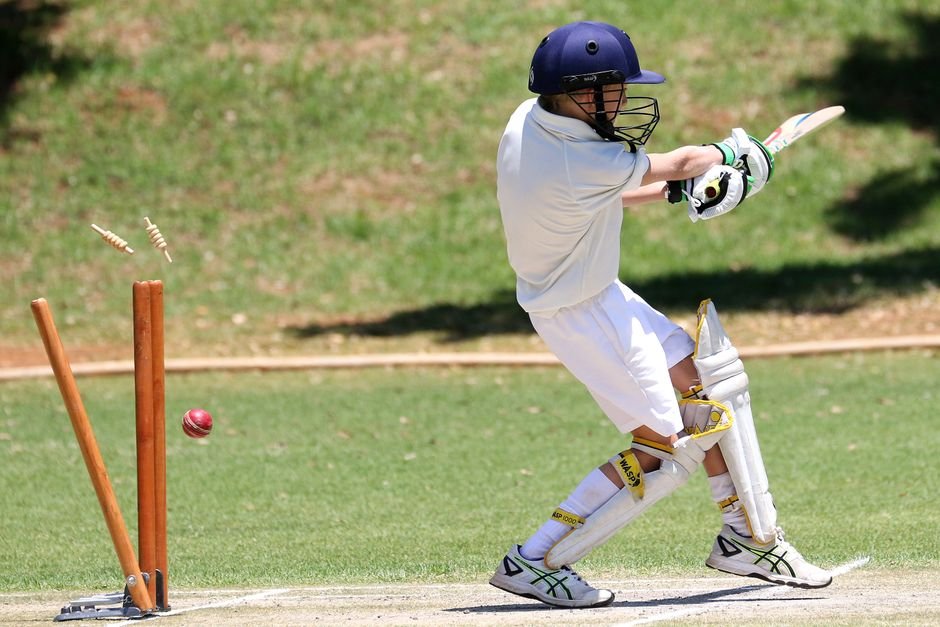
Learning how to bowl leg spin is one of the most rewarding skills in cricket. It takes patience, but once you master the basics, you can become a genuine match-winner at any level. This guide breaks down wrist position, loop, and the key variations you need to build a complete leg spin arsenal.
Table of Contents
The Fundamentals: How to Bowl Leg Spin with Correct Grip
Before you worry about turn or variations, you need a solid grip. Get this wrong and everything else falls apart. The leg spin grip is the foundation of everything.
- Place the ball across the top joint of your index and middle fingers. Your fingers should sit comfortably on the seam.
- Bend your third finger along the seam. This finger does most of the work and drives the spin.
- Tuck your little finger and thumb lightly against the ball. They act as a guide, not a grip.
Kookaburra County Cricket Ball
Master your leg spin grip and wrist action with a quality Kookaburra cricket ball — built for serious practice.
ⓘ Affiliate link — we earn a small commission if you buy, at no extra cost to you.
The ball should feel secure but never squeezed. A tense grip kills wrist freedom. Practise holding the ball correctly every day, even when you are not bowling.
Wrist Position: The Engine of Leg Spin
Your wrist is what separates leg spin from every other type of bowling. It is the engine that generates turn. Most club bowlers struggle here, so pay close attention.
At the point of release, your wrist should rotate clockwise (for a right-arm bowler) so that the back of your hand faces the batsman. Think of it as turning a door handle aggressively from the inside.
- Cock your wrist early: As your arm comes over, bend your wrist back slightly before release. This loads up the spin.
- Drive through with the third finger: At release, flick your third finger hard across the seam. This imparts the revolutions.
- Follow through with the wrist: After release, your wrist should continue rotating. Do not freeze it. A full wrist rotation means more spin and better control over time.
- Keep the elbow high: A high elbow naturally encourages a full wrist rotation. Dropping the elbow collapses the action.
Record yourself from behind the wicket. If you can see the back of your hand facing down the pitch at release, your wrist position is correct.
Creating Loop and Flight
Turn alone will not get you wickets. Loop is what makes leg spin dangerous. A flat leg spinner is easy to read and easier to hit. A bowler who tosses it up forces the batsman into a decision.
- Release the ball slightly earlier in your arc to push it higher into the air.
- Use your shoulder to generate extra revolutions without extra pace. More spin equals more dip.
- Vary your pace subtly. A slower, loopy delivery followed by a slightly quicker, flatter one keeps batsmen guessing.
The dip you see from great leg spinners like Shane Warne or Anil Kumble comes from high revolutions combined with genuine loop. Work on this separately in training with target areas on a pitch.
Step-by-Step: How to Bowl Leg Spin Key Variations
Once your stock leg break is consistent, you are ready to add weapons. Here are the three variations every leg spinner needs.
- The Googly: Your most important variation. Cock your wrist further so the back of your hand faces the sky at release. The ball comes out from the back of the hand and turns the opposite way, into a right-handed batsman. Keep your action identical to your stock ball.
- The Topspinner: Roll your wrist over the top of the ball at release instead of around it. The ball dips sharply, skids on and goes straight. It is a brilliant wicket-taking delivery when a batsman is driving hard.
- The Flipper: Squeezed out from under the hand with a clicking motion of the thumb and middle finger. It stays low and skids through quickly. This is the hardest variation to master, so add it last.
Only bowl a variation in a match once you can land it on a good length in the nets seven times out of ten. Consistency wins games. Fancy variations that go to the boundary do not.
Common Mistakes and How to Fix Them
Knowing how to bowl leg spin correctly also means knowing what to avoid. These are the most common errors at club level.
- Dropping the wrist at release – results in a flat, drifting full toss. Practise wrist rotations without a ball to build muscle memory.
- Gripping too tight – kills spin and strains your fingers. Relax your hand.
- Bowling too fast too soon – pace kills loop and turn. Slow down, trust the spin.
- Changing action for variations – batsmen will spot it instantly. Disguise everything from the same smooth action.
Conclusion
Mastering how to bowl leg spin takes dedication, but the rewards are enormous. Start with your grip, build your wrist position, develop genuine loop, and add variations only when your stock ball is reliable. Bowl in front of a mirror, record your action, and ask a coach to give you honest feedback. The best leg spinners in the world were once club players who refused to give up. Stay consistent, stay patient, and the wickets will come.