
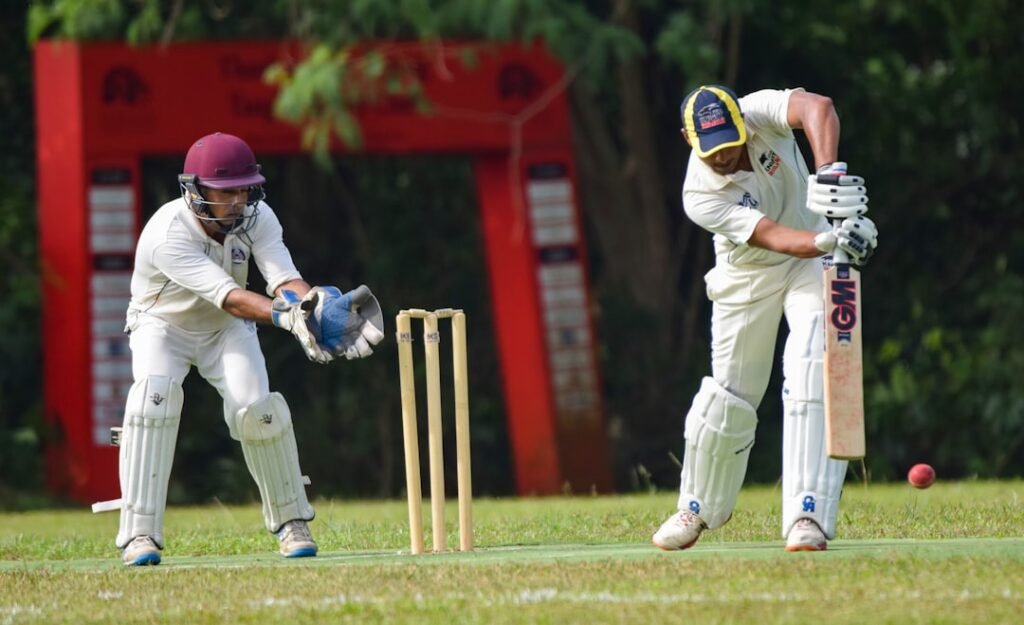
Photo by CFPhotosin Photography on Unsplash
If you want to dominate short-pitched bowling, you need to master how to play pull shot cricket. The pull shot is one of the most satisfying strokes in batting. Executed well, it turns a bowler’s aggressive delivery into a boundary. This guide breaks down the technique, timing, and drills so you can add this shot to your game with confidence.
Table of Contents
What Is the Pull Shot and When to Play It
The pull shot is played against a short-pitched delivery that rises between hip and shoulder height. You hit across the line, pulling the ball to the leg side, usually through midwicket or square leg. It is most effective against pace bowlers on bouncy pitches.
Knowing when to play it is just as important as how to play it. Look for these triggers:
Gray-Nicolls Velocity Cricket Batting Gloves
Protect your hands while playing aggressive pull shots with high-quality batting gloves built for pace bowling.
ⓘ Affiliate link — we earn a small commission if you buy, at no extra cost to you.
- The ball is short of a length and climbing toward your body
- The bounce is predictable and not uneven
- You have enough time and space to get into position
- The ball is not rising above shoulder height, where a hook shot takes over
How to Play Pull Shot Cricket: Step-by-Step Technique
Learning how to play pull shot cricket correctly starts with your setup and ends with your follow-through. Break the shot into these key stages and practice each one deliberately.
- Early Recognition: Read the length as soon as the ball leaves the bowler’s hand. Spot the short ball early. The sooner you identify it, the more time you have to position yourself.
- Back and Across: Move your back foot back and slightly across toward off stump. This creates room and gets you into line with the ball. Your weight shifts onto the back foot completely.
- Head Steady, Eyes Level: Keep your head still and your eyes level with the ball. Do not pull your head away. Many batters miss the pull shot because they take their eye off the ball at the moment of contact.
- High Elbow, Horizontal Bat: Raise your front elbow as you swing. The bat should be horizontal at the point of impact. This is what makes it a pull rather than a wild swing.
- Strike the Ball Early: Hit the ball slightly in front of your body, not alongside or behind you. Early contact gives you power and control and reduces the risk of a top edge.
- Full Follow-Through: Roll your wrists over after contact and follow through across your body toward the leg side. A complete follow-through keeps the ball down and maximises power.
Common Mistakes to Avoid
Most club players struggle with the pull shot for the same reasons. Identifying your errors is the fastest way to improve.
- Moving too late: If you start moving after the ball has pitched, you will be cramped and rushed
- Pulling the head away: Loss of eye contact causes top edges and mistimed shots
- Playing the ball too fine: Hitting the ball too square or behind you loses control and increases the top-edge risk
- Flat-footed trigger: Not transferring weight to the back foot leaves you off balance and reduces power
Timing and Reading the Bounce
Timing separates a good pull shot from a great one. The key is not to rush the stroke. Many batters try to muscle the ball. Instead, let the ball come to you and meet it with a smooth, controlled swing.
Reading bounce is a skill that develops with experience. On slower pitches, the ball sits up and gives you time. On quick pitches, you must trust your instincts and move earlier. Practice against different bowling speeds to develop this feel.
The sweet spot for contact is level with your chest or just below your chin. If the ball is getting up above your chin consistently, consider the hook shot instead or leave it.
Practice Drills to Sharpen Your Pull Shot
Understanding how to play pull shot cricket in theory only takes you so far. Deliberate practice is where the shot becomes instinctive. Try these drills in your next training session:
- Throwdown drill: Ask a coach or teammate to feed short-pitched throws from 10 to 12 metres. Focus on footwork and keeping the head still
- Tee ball training: Place a ball on a batting tee at hip height. Practice the swing path and wrist roll repeatedly without worrying about movement
- Short-pitch net sessions: Face a pace bowler in the nets with specific instructions to bowl short. Target 20 to 30 pull shots per session
- Video review: Film your pull shot from side-on and behind the bowler. Check your head position, bat path, and follow-through against this guide
Conclusion
Mastering how to play pull shot cricket takes patience, good technique, and consistent practice. Focus on early recognition, solid back-foot movement, a steady head, and a horizontal bat at impact. Work through the drills above in every net session. Over time, the pull shot will become one of your most reliable and powerful scoring options against any short-pitched attack.